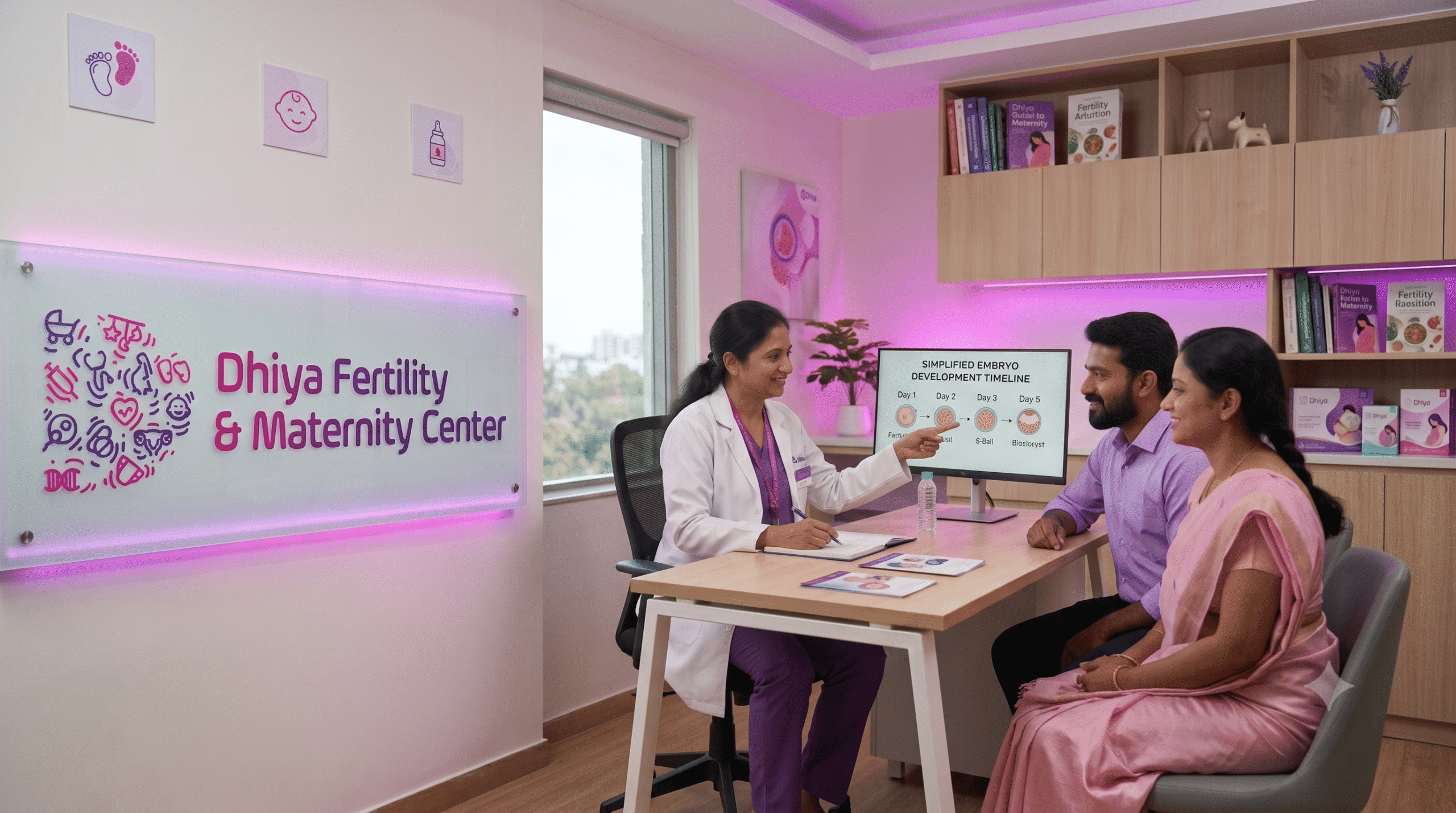
FET Meaning in Tamil: What Is Frozen Embryo Transfer?
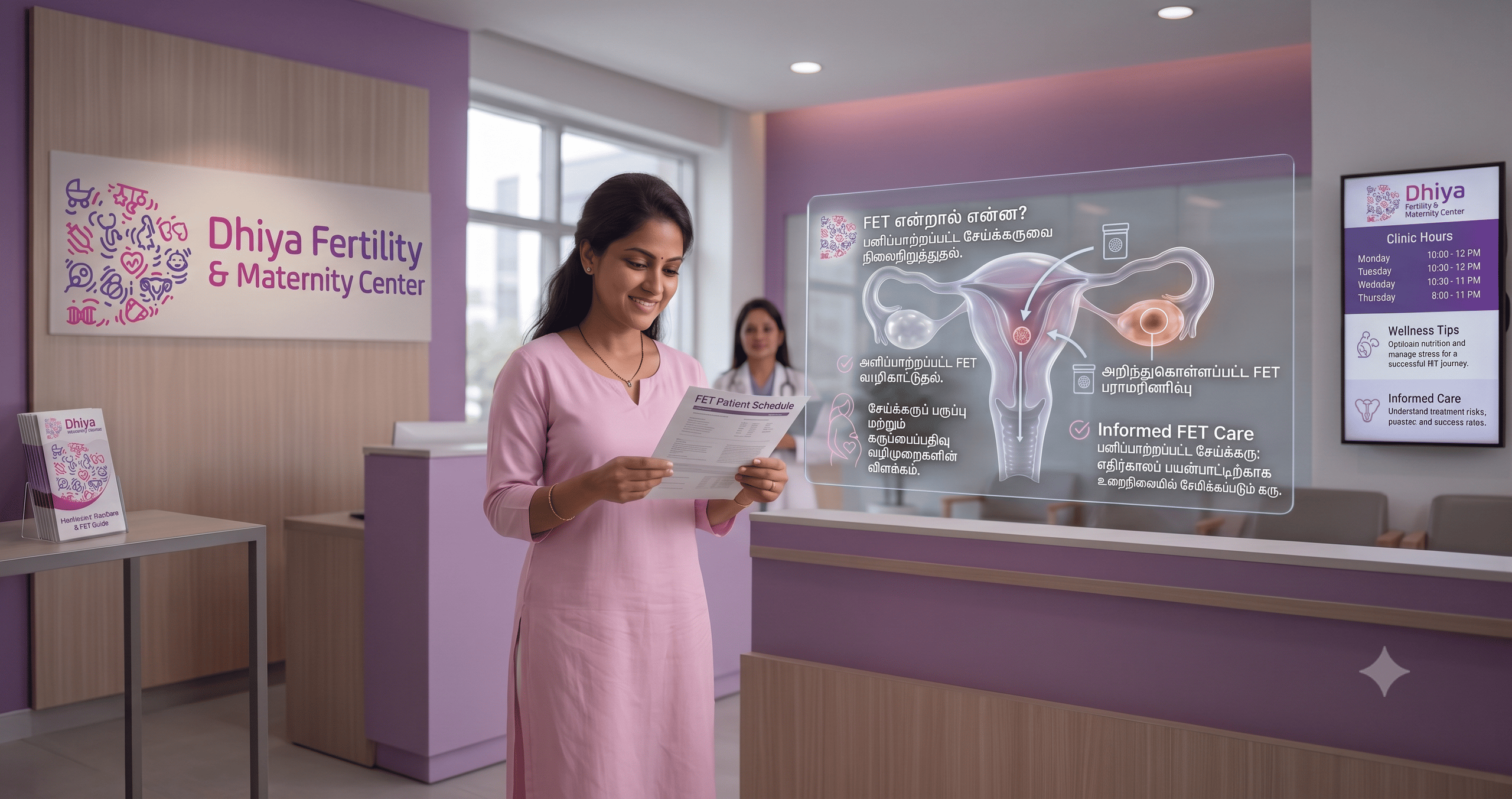
FET stands for Frozen Embryo Transfer. In Tamil it is called உறைந்த கரு மாற்றம் (urainda karu maatram). It is the stage of IVF treatment where an embryo that was created earlier and frozen in the laboratory is thawed and placed into the uterus. The embryo can be stored safely for years before transfer.
If your doctor has just said the word “FET” and you nodded along without fully following, you’re in good company. Fertility treatment comes with its own vocabulary, and most of it is in English even when the conversation is in Tamil.
This guide explains what FET actually means, why it is often the better option, and exactly what happens at each step.
FET பொருள் என்ன? (FET meaning in Tamil)
FET என்றால் “Frozen Embryo Transfer” — தமிழில் உறைந்த கரு மாற்றம்.
IVF சிகிச்சையின் போது, உங்கள் கருமுட்டைகளும் (eggs) கணவரின் விந்தணுக்களும் (sperm) ஆய்வகத்தில் இணைக்கப்பட்டு கருக்கள் (embryos) உருவாக்கப்படுகின்றன.
பொதுவாக ஒரு IVF சுழற்சியில் ஒன்றுக்கு மேற்பட்ட கருக்கள் உருவாகும். அவற்றில் ஒன்றை உடனடியாக கருப்பையில் வைக்கலாம். மீதமுள்ள ஆரோக்கியமான கருக்களை உறைய வைத்து (freeze) பாதுகாப்பாக சேமித்து வைக்க முடியும்.
பின்னர், சரியான நேரத்தில் அந்த உறைந்த கருவை மெதுவாக கரைத்து (thaw) கருப்பையில் வைக்கும் செயல்முறையே FET — உறைந்த கரு மாற்றம்.
எளிமையாகச் சொன்னால்: முதலில் கரு உருவாக்கப்படுகிறது → உறைய வைக்கப்படுகிறது → பின்னர் பொருத்தமான மாதத்தில் கருப்பையில் வைக்கப்படுகிறது.
FET ஏன் பரிந்துரைக்கப்படுகிறது?
- கருப்பை தயாராக இருக்கும் போது மட்டும் மாற்றம் செய்யலாம். IVF மருந்துகளால் ஹார்மோன் அளவு அதிகமாக இருக்கும் மாதத்தில் கருப்பை உட்சுவர் (endometrium) எப்போதும் ஏற்றதாக இருக்காது. அடுத்த மாதம் அது இயல்பு நிலைக்குத் திரும்பியதும் மாற்றம் செய்வது சிறந்த முடிவைத் தரும்.
- OHSS ஆபத்தைத் தவிர்க்கலாம். சில பெண்களுக்கு கருமுட்டை தூண்டுதலுக்குப் பிறகு OHSS எனப்படும் பிரச்சினை வரலாம். அப்போது கருக்களை உறைய வைத்து, உடல் நலம் தேறியபின் மாற்றம் செய்வது பாதுகாப்பானது.
- மீண்டும் முழு IVF சுழற்சி தேவையில்லை. முதல் முயற்சி வெற்றி பெறவில்லை என்றால், சேமித்த கருவைப் பயன்படுத்தலாம். மீண்டும் ஊசி, தூண்டுதல், கருமுட்டை எடுப்பு எதுவும் தேவையில்லை. செலவும் மன அழுத்தமும் குறையும்.
- மரபணு பரிசோதனை (PGT) செய்ய நேரம் கிடைக்கும். கருவின் குரோமோசோம் பரிசோதனை முடிவுகள் வரும் வரை கருக்களை உறைய வைத்திருக்கலாம்.
- இரண்டாவது குழந்தைக்கும் பயன்படும். சில ஆண்டுகள் கழித்து மற்றொரு குழந்தை வேண்டும் என்றால், சேமித்த கருவைப் பயன்படுத்தலாம்.
உறைந்த கரு எவ்வளவு காலம் பாதுகாப்பாக இருக்கும்?
கருக்கள் வைட்ரிஃபிகேஷன் (vitrification) எனும் அதிவேக உறைவிப்பு முறையில், –196°C வெப்பநிலையில் திரவ நைட்ரஜனில் சேமிக்கப்படுகின்றன. இந்த வெப்பநிலையில் உயிரியல் செயல்பாடுகள் முற்றிலும் நின்றுவிடும்.
பல ஆண்டுகள் கழித்துக் கரைக்கப்பட்டாலும் 95%க்கும் மேற்பட்ட கருக்கள் நன்றாகவே பிழைத்துக் கொள்கின்றன. உறைந்த காலம் குழந்தையின் ஆரோக்கியத்தைப் பாதிக்காது.
FET అంటే ఏమిటి? (FET meaning in Telugu)
FET అంటే Frozen Embryo Transfer — తెలుగులో ఘనీభవించిన పిండ మార్పిడి.
IVF చికిత్సలో ప్రయోగశాలలో తయారైన పిండాలను (embryos) గడ్డకట్టించి భద్రపరుస్తారు. తరువాత సరైన సమయంలో ఆ పిండాన్ని కరిగించి గర్భాశయంలో ఉంచే ప్రక్రియనే FET అంటారు.
గర్భాశయం పూర్తిగా సిద్ధంగా ఉన్నప్పుడు మాత్రమే పిండాన్ని ఉంచడం వల్ల విజయ శాతం ఎక్కువగా ఉంటుంది. అలాగే OHSS వంటి సమస్యలను నివారించవచ్చు, మరో పూర్తి IVF సైకిల్ అవసరం లేకుండా మిగిలిన పిండాలను ఉపయోగించుకోవచ్చు.
How embryos are frozen
The technique is called vitrification, and it replaced the older slow-freezing method more than a decade ago.
Slow freezing allowed ice crystals to form inside the cell, which damaged the embryo. Vitrification cools the embryo so rapidly — thousands of degrees per minute — that the water inside turns to a glass-like solid without ever forming crystals. That’s where the name comes from.
The embryos are then stored in liquid nitrogen at –196°C, where all biological activity stops completely. Nothing ages. Nothing degrades.
More than 95% of vitrified embryos survive the thaw in a good laboratory. This single improvement is the reason frozen transfers went from a fallback option to, in many cases, the preferred one.
Why FET is often better than a fresh transfer
This surprises a lot of patients. If the embryo is ready now, why wait?
The answer is about your uterus, not the embryo.
During an IVF stimulation cycle, you take medication to encourage multiple eggs to mature. That pushes your oestrogen far above natural levels. Those high hormone levels do something unhelpful — they alter the lining of the uterus and shift the narrow window when it’s most receptive to an embryo.
So you can have a perfect embryo arriving at a uterus that isn’t quite ready to receive it.
A frozen transfer separates the two. You recover from the stimulation, your hormones return to normal, and the transfer happens in a cycle prepared specifically to make the lining ideal. The embryo arrives when the door is actually open.
There are practical reasons too:
- OHSS prevention. If you respond strongly to stimulation, transferring in that same cycle can worsen ovarian hyperstimulation syndrome. Freezing everything and transferring later is the safer path.
- Genetic testing. If embryos are tested with PGT, results take days to weeks. Freezing buys that time.
- Single embryo transfer. Because leftover embryos are safely stored, there’s less pressure to transfer more than one — which is how twin pregnancies and their complications are avoided.
- Fertility preservation. Embryos frozen before cancer treatment, or simply before age becomes a factor, can be used years later. If you’re considering this, see our page on fertility preservation for women.
What happens in an FET cycle, step by step
An FET cycle is considerably gentler than a full IVF cycle. No egg retrieval, no anaesthesia, far fewer injections.
Step 1 — Planning consultation. Your doctor reviews how many embryos are stored, their grade and stage, and decides which type of cycle suits you.
Step 2 — Preparing the lining (about 2 to 3 weeks). You take oestrogen, usually as tablets or patches, to thicken the endometrium. Scans track its progress. Most doctors want to see a lining of roughly 7 to 8 mm with a healthy triple-line appearance before going ahead.
Step 3 — Starting progesterone. Once the lining looks right, progesterone is added. This is the hormone that makes the uterus receptive, and it effectively starts the clock for the transfer.
Step 4 — Thawing the embryo. On transfer day, the embryologist warms the embryo and checks that it has survived and is developing normally. You’ll be told its condition before proceeding.
Step 5 — The transfer itself. A thin, soft catheter passes through the cervix and the embryo is placed into the uterus under ultrasound guidance. It takes a few minutes. No anaesthesia, no cutting, and most women describe it as similar to a smear test. You go home the same day.
Step 6 — The two-week wait. You continue progesterone support. A blood test for beta hCG is done around 9 to 14 days after transfer to confirm pregnancy.
Home urine tests before that date cause an enormous amount of unnecessary distress, in both directions. The blood test is the one that counts.
Natural cycle or medicated cycle?
There are two ways to prepare for an FET, and the right one depends on your cycles.
| Natural cycle FET | Medicated (hormone replacement) FET | |
|---|---|---|
| Best for | Regular, predictable ovulation | Irregular cycles, PCOS, absent ovulation |
| Medication | Minimal — sometimes only a trigger injection | Oestrogen and progesterone throughout |
| Timing | Follows your own ovulation | Scheduled by the clinic |
| Monitoring | More frequent scans to catch ovulation | Fewer, more predictable scans |
| Flexibility | Less — your body sets the date | More — the date can be planned |
Neither is universally better. Women with regular cycles often do well with a natural cycle FET and appreciate taking fewer drugs. Women with PCOS or irregular ovulation generally need a medicated cycle, simply because there’s no reliable ovulation to time the transfer against.
FET success rates
Frozen embryo transfers now produce pregnancy rates equal to or better than fresh transfers in most clinics. That’s a genuine reversal from fifteen years ago.
The factors that actually drive your chances:
- The age you were when the eggs were collected — not your age at transfer. This matters enormously and is often misunderstood. An embryo frozen at 31 carries the potential of a 31-year-old egg, even if it’s transferred when you’re 36.
- The stage and grade of the embryo. Blastocysts (Day 5) generally implant better than Day 3 embryos.
- Whether the embryo was genetically tested.
- The thickness and quality of the uterine lining.
- Underlying conditions such as fibroids, endometriosis, adenomyosis or a thin endometrium.
Be cautious with headline success rates advertised online. A clinic quoting a single big number without saying which age group, which embryo stage, and whether it’s per transfer or per cycle isn’t telling you much. Ask for the figure that applies to your situation.
Working out your due date after FET
Once your transfer is done and pregnancy is confirmed, dating an IVF pregnancy is actually more accurate than a natural one, because the exact age of the embryo is known.
- Day 5 (blastocyst) transfer: due date is transfer date + 261 days
- Day 3 (cleavage stage) transfer: due date is transfer date + 263 days
Our free Pregnancy Week Calculator has an IVF option built in. Enter your transfer date, choose Day 3 or Day 5, and it gives you your exact week, your due date and a week-by-week view of your baby’s growth. Most general calculators don’t offer this.
Is FET right for you?
FET is usually recommended when:
- You have surplus good-quality embryos from an IVF cycle
- You are at risk of OHSS
- Your embryos are undergoing genetic testing
- Your uterine lining wasn’t ideal during the stimulation cycle
- You had a failed fresh transfer and have embryos in storage
- You want to space out pregnancies or plan a second child later
- You are freezing embryos before cancer treatment or for age-related reasons
The only way to know is a proper assessment. At Dhiya Fertility & Maternity Center in Chennai, our fertility team will review your embryo report, assess your uterine lining and cycle pattern, and explain in plain Tamil or English which approach gives you the best chance.
Common questions
Is a baby born from a frozen embryo healthy? Yes. Decades of data show no increase in birth defects or developmental problems in children born after frozen embryo transfer. Some studies suggest slightly higher average birth weights compared with fresh transfers.
Does the embryo age while it is frozen? No. At –196°C all biological activity stops entirely. An embryo stored for five years is biologically the same as the day it was frozen.
Is FET painful? The transfer itself is not. There’s no anaesthesia and no incision. Most women compare it to a cervical smear — a few minutes of mild pressure. Some cramping afterwards is normal.
How long does an FET cycle take? Usually about two to four weeks from starting medication to the transfer, then another two weeks until the pregnancy blood test.
Can I go back to work after the transfer? Yes. Prolonged bed rest is not recommended and doesn’t improve results. Take it easy for a day, then return to normal activity while avoiding heavy lifting and intense exercise.
How many embryos will be transferred? Most clinics now transfer a single good-quality blastocyst, especially for younger patients, because twin pregnancies carry higher risks for both mother and babies. Your doctor will discuss what’s appropriate for you.
What does FET cost compared to full IVF? An FET cycle costs considerably less than a complete IVF cycle, because there is no ovarian stimulation, no egg retrieval and no laboratory fertilisation. Freezing and storage fees apply separately. Ask for a written breakdown before you begin.
Take the next step
If you have embryos in storage, or you’re weighing up a fresh versus frozen transfer, we can talk it through properly — in Tamil or English, with no pressure.