
If you’re actively trying to conceive, Ovulation Tracking is one of the most important steps you can take to improve your chances of pregnancy. Knowing exactly when your fertile window opens—and when ovulation occurs—helps you time intercourse accurately, avoid guesswork, and feel more confident about your fertility journey.
Today, many women rely on ovulation predictor kits, while others prefer digital tracking tools or clinical monitoring. But which method truly works better?
Let’s break it down clearly.
Understanding Ovulation: Why Timing Matters
Ovulation is the process where your ovary releases an egg, usually once per menstrual cycle. The egg survives for about 24 hours, while sperm can live up to 5 days inside the body.
This creates a fertile window of around 5–6 days each cycle.
Missing this window—even by a day—can significantly reduce your chances of conception. That’s why accurate ovulation tracking matters more than most couples realize.
What Is Ovulation Tracking?
Ovulation tracking is the process of identifying your fertile days using:
- Cycle length data
- Physical symptoms (cervical mucus, basal temperature)
- Hormone patterns
- Digital fertility tools
- Ultrasound monitoring (in clinical settings)
The goal is simple: predict ovulation before it happens, so you can plan intercourse at the most fertile time.
Ovulation Predictor Kits: How Do They Work?
Ovulation kits detect the LH (luteinizing hormone) surge in urine. This hormone rises 24–36 hours before ovulation.
✅ Pros of Ovulation Kits
- Easy to use at home
- Gives quick results
- Helpful for regular cycles
❌ Limitations
- Can miss ovulation if testing time is off
- Less reliable for PCOS or irregular cycles
- Only shows hormone surge, not actual egg release
- Monthly recurring cost
- Doesn’t offer long-term cycle insights
For many women, kits provide a rough estimate—but not the full fertility picture.
Why Digital Ovulation Tracking Is Gaining Popularity
Modern fertility tracking tools analyze multiple cycle patterns over time, not just a single hormone spike. They learn your body rhythm and improve predictions month after month.
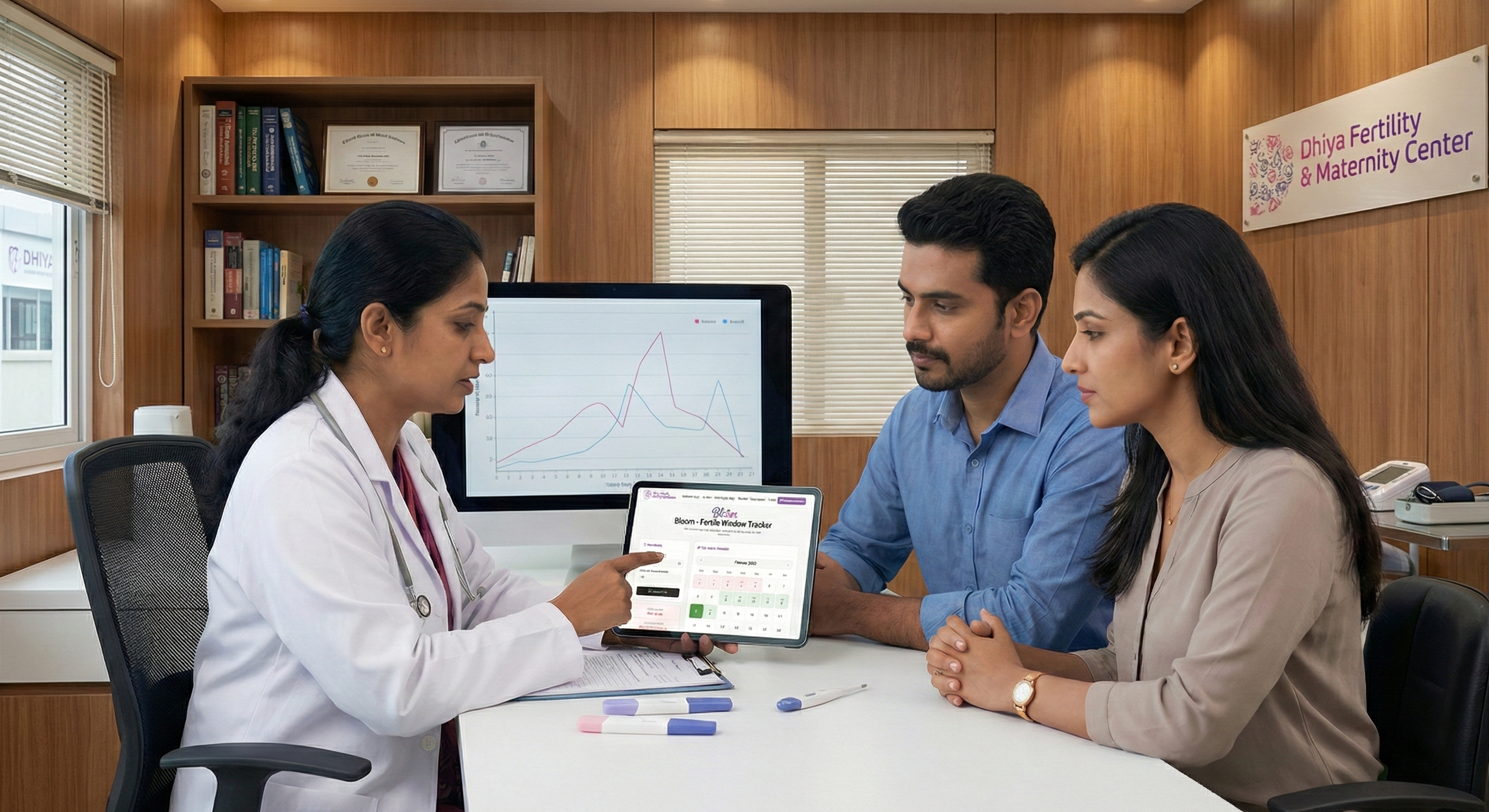
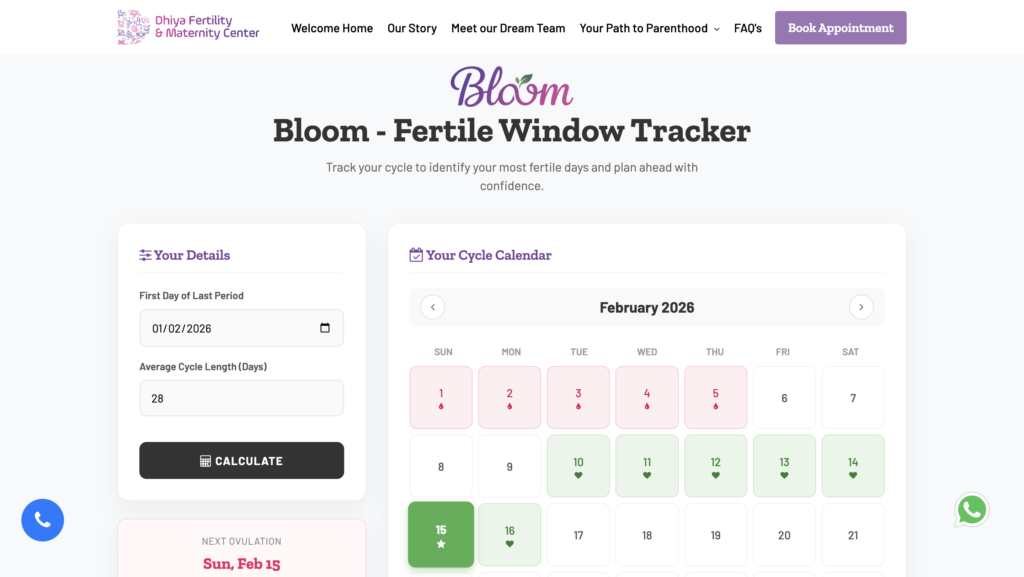
At Dhiya Fertility & Maternity Center, patients also have access to Bloom – Fertile Window Tracker, a smart digital tool available directly on the DFMC website.
🌸 Bloom – Fertile Window Tracker (DFMC)
Bloom is designed to help women track ovulation every month with confidence, while also offering a Fertility Wellness Guide for holistic reproductive health.
With Bloom, you can:
- Predict your fertile window accurately
- Track cycles month after month
- Access fertility wellness guidance
- Plan pregnancy naturally and confidently
You can try it here:
👉 https://thedfmc.com/ovulation_tracker.php
🌸 Ovulation Tracker – Plan Your Pregnancy with Confidence
Whether you’re trying to conceive or planning ahead, Bloom supports informed reproductive choices without the stress of manual tracking or repeated kit testing.
Ovulation Tracking vs Kits: A Simple Comparison
| Feature | Ovulation Kits | Ovulation Tracking (Bloom / Digital Tools) |
| Predicts fertile window | Limited | Yes |
| Tracks monthly patterns | No | Yes |
| Useful for irregular cycles | Often inaccurate | Better insights over time |
| Ongoing cost | Yes | Usually free or minimal |
| Provides wellness guidance | No | Yes |
| Supports pregnancy planning | Basic | Comprehensive |
Which Method Actually Improves Pregnancy Chances?
For women with perfectly regular cycles, ovulation kits may help.
But for most couples—especially those with:
- Irregular periods
- PCOS
- Stress-related cycle changes
- Unexplained infertility
- Long-term conception planning
👉 Ovulation tracking tools like Bloom are more effective, because they analyze trends, predict fertile windows, and support consistency.
Clinically, fertility specialists often combine ovulation tracking with scans and hormone monitoring for best outcomes.
When Should You See a Fertility Specialist?
Consider professional guidance if:
- You’ve been trying for 6–12 months without success
- Your cycles are irregular
- You’re over 35
- You have PCOS, thyroid issues, or endometriosis
- You want medical support alongside tracking
Personalized care makes a major difference.
Final Thoughts
Ovulation tracking isn’t just about marking dates—it’s about understanding your body.
While ovulation kits offer short-term signals, smart tracking tools like Bloom – Fertile Window Tracker provide long-term clarity, fertility wellness guidance, and confidence in your pregnancy planning.
If you’re serious about conception, start with consistent ovulation tracking—and seek expert advice when needed.
Frequently Asked Questions (FAQ)
1. What is ovulation tracking?
Ovulation tracking helps identify your fertile window by monitoring cycle patterns, symptoms, and hormonal changes to improve pregnancy chances.
2. Are ovulation kits accurate?
They detect LH surge but may not confirm actual ovulation. Results can vary, especially in irregular cycles.
3. Is digital ovulation tracking better than kits?
Yes. Digital tracking tools analyze multiple cycles and provide more reliable fertile window predictions over time.
4. Can Bloom help me get pregnant?
Bloom helps you identify fertile days, track cycles monthly, and follow fertility wellness guidance—supporting natural conception planning.
5. How soon can I conceive after tracking ovulation?
Some couples conceive within a few cycles. Others may take longer depending on age, health, and fertility factors.
6. When should I seek medical help?
If pregnancy hasn’t occurred after 6–12 months of tracking, consult a fertility specialist for evaluation.
Visit DFMC : https://thedfmc.com/ for the most beautiful pregnancy moments in your life.