HSIL vs ASCUS: When Further Cervical Screening Becomes Important
Many women feel anxious after receiving an abnormal Pap smear report, especially when they see terms like ASCUS or HSIL. These medical terms may sound frightening at first, but understanding what they actually mean can help reduce confusion and stress.
An abnormal cervical screening result does not automatically mean cervical cancer. In many cases, these findings simply indicate that further evaluation is needed to understand the condition better.
This blog explains:
- What ASCUS and HSIL mean
- The difference between HSIL vs ASCUS
- Why further cervical screening becomes important
- What tests doctors may recommend next
- When to consult a gynecologist
Understanding Cervical Cancer Screening
Cervical cancer screening helps detect abnormal changes in cervical cells before they become serious. The most common screening methods include:
- Pap smear test
- HPV testing
- Colposcopy
- Advanced cervical screening evaluation
Regular screening helps doctors identify problems early and provide timely treatment when necessary.
What Does ASCUS Mean?
ASCUS
Atypical Squamous Cells of Undetermined Significance
ASCUS is one of the most common abnormal Pap smear results. It means that some cervical cells appear slightly unusual, but the exact reason is not completely clear.
In many cases, ASCUS may be caused by:
- Mild infection
- Inflammation
- Hormonal changes
- Temporary HPV infection
ASCUS is usually considered a mild abnormality, but doctors may recommend additional tests to rule out more serious conditions.
What Does HSIL Mean?
HSIL
High-grade Squamous Intraepithelial Lesion
HSIL indicates more significant abnormal changes in cervical cells. These changes are more likely to be associated with high-risk HPV infections and may require closer medical evaluation.
HSIL does not mean cancer, but it suggests a higher chance of pre-cancerous cervical changes that should not be ignored.
Doctors usually recommend:
- Colposcopy
- Biopsy if necessary
- Follow-up cervical evaluation
HSIL vs ASCUS: What Is the Difference?
| ASCUS | HSIL |
| Mild abnormal cell changes | More significant abnormal changes |
| Often temporary | Requires closer evaluation |
| May resolve naturally | Higher risk of progression |
| Usually lower concern | Needs immediate follow-up |
| Often monitored with repeat tests | Colposcopy commonly recommended |
Why Further Cervical Screening Becomes Important
Further cervical screening helps doctors:
- Identify the cause of abnormal cells
- Detect cervical changes early
- Prevent progression to cervical cancer
- Decide whether treatment is needed
Additional screening is important because abnormal cervical changes may not cause noticeable symptoms in the early stages.
What Tests May Be Recommended Next?
Depending on the report, doctors may suggest:
1. HPV Testing
Checks for high-risk HPV strains linked to cervical cancer.
2. Colposcopy
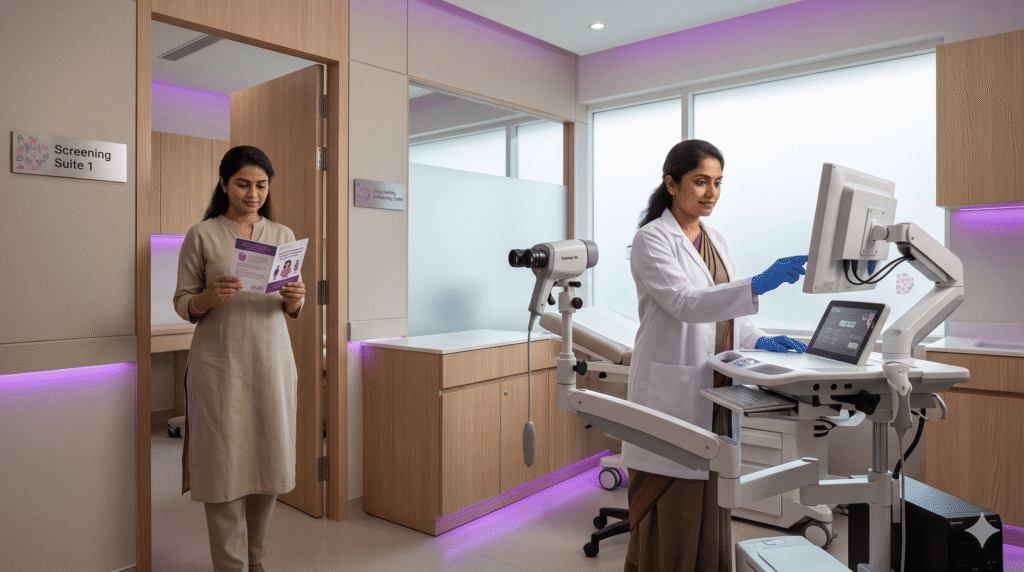
A detailed examination of the cervix using a specialized device called a colposcope.
This helps doctors closely examine abnormal areas and decide if a biopsy is required.
3. Cervical Biopsy
In some cases, a small tissue sample is collected for laboratory testing.
Common Symptoms That Should Not Be Ignored
Women should consult a gynecologist if they experience:
- Unusual vaginal bleeding
- Bleeding after intercourse
- Persistent pelvic pain
- Unusual discharge
- Repeated abnormal Pap smear reports
Even without symptoms, routine screening remains important.
HPV and Cervical Cell Changes
Many abnormal cervical changes are linked to Human Papillomavirus (HPV) infection.
Important things to know:
- HPV infection is common
- Many cases resolve naturally
- Some high-risk HPV strains require monitoring
- HPV vaccination can reduce future risk
Early screening and follow-up care are key to prevention.
Importance of Early Detection
Early cervical screening helps:
- Detect abnormalities before they become serious
- Improve treatment outcomes
- Reduce future complications
- Support preventive women’s healthcare
This is why regular gynecology checkups are strongly recommended.
Advanced Cervical Screening at DFMC
At Dhiya Fertility & Maternity Center (DFMC), Chennai, women’s preventive healthcare is supported with:
- Advanced cervical screening
- Colposcopy evaluation
- HPV-related guidance
- Preventive gynecology consultations
- Personalized patient care
The focus is on helping women understand their reports clearly and receive timely medical support without unnecessary fear.
When Should You Consult a Gynecologist?
You should consider medical consultation if:
- Your Pap smear report shows ASCUS or HSIL
- You have HPV-related concerns
- You experience irregular bleeding or pelvic discomfort
- You have not undergone cervical screening for several years
Regular preventive care helps maintain long-term women’s health.
Final Thoughts
Seeing terms like ASCUS or HSIL in a report can feel stressful, but these findings are mainly signals that further evaluation is needed.
Most importantly:
- Not all abnormal results mean cancer
- Early screening greatly improves outcomes
- Timely medical guidance helps prevent complications
Regular cervical screening and awareness play an important role in women’s preventive healthcare.
Frequently Asked Questions (FAQ)
1. What is the difference between ASCUS and HSIL?
ASCUS indicates mild abnormal cervical cell changes, while HSIL suggests more significant abnormalities that require closer evaluation.
2. Does HSIL mean cervical cancer?
No. HSIL does not mean cancer, but it may indicate higher-risk abnormal changes that need further testing.
3. Is colposcopy necessary after HSIL results?
Doctors commonly recommend colposcopy after HSIL results for detailed cervical evaluation.
4. Can ASCUS go away naturally?
Yes. In many cases, ASCUS may resolve naturally, especially if caused by temporary inflammation or mild HPV infection.
5. How often should women undergo cervical screening?
Screening frequency depends on age and medical history, but regular gynecology checkups are important.
Reach Us
- No. 46 G Square, Kanthanchavadi OMR, Chennai, TAMIL NADU 600096, India
- +91 99621 00003
- https://thedfmc.com/