
Why Advanced Cervical Cancer Screening Is Important for Women’s Health
Cervical cancer is one of the few cancers that can often be detected early and prevented with the right screening methods. Many women ignore early symptoms or delay regular checkups because they feel healthy, busy, or unsure about when screening is actually needed. However, regular cervical screening plays an important role in protecting long-term women’s health.
Today, with modern medical technology and better awareness, advanced cervical cancer screening helps doctors identify abnormal cervical changes much earlier than before. Early detection gives women better treatment options, reduces complications, and in many cases helps prevent cervical cancer from developing completely.
What Is Cervical Cancer Screening?
Cervical cancer screening is a preventive test used to detect abnormal cells in the cervix before they become cancerous. These tests help doctors identify changes early, often before symptoms appear.
Common cervical screening methods include:
- Pap Smear Test
- HPV Test
- Colposcopy
- Advanced cervical imaging and evaluation
Regular screening is one of the most effective ways to reduce cervical cancer risk.
Why Advanced Cervical Cancer Screening Matters
Traditional screening methods are helpful, but advanced screening techniques improve accuracy and early detection.
Advanced screening helps:
- Detect abnormal cervical changes earlier
- Identify high-risk HPV infections
- Reduce chances of delayed diagnosis
- Support timely treatment and follow-up
- Improve women’s preventive healthcare
In many cases, women may not experience any symptoms in the early stages. Screening helps detect issues even when everything feels normal.
Who Should Consider Cervical Cancer Screening?
Women should consider regular screening if they:
- Are above 21 years of age
- Are sexually active
- Have irregular bleeding or unusual discharge
- Have a family history of cervical cancer
- Have previous abnormal Pap smear results
- Have HPV infection or related concerns
Doctors may recommend screening intervals based on age, medical history, and previous reports.
Understanding HPV and Cervical Cancer
One of the major causes of cervical cancer is Human Papillomavirus (HPV) infection. Certain types of HPV are considered high-risk because they can cause abnormal cervical cell changes over time.
The good news is:
- HPV-related cervical changes can often be detected early
- HPV vaccination helps reduce future risk
- Regular screening improves prevention significantly
Women often assume HPV symptoms are obvious, but many infections show no visible signs.
What Happens During Advanced Cervical Screening?
The procedure depends on the type of screening advised by the doctor.
Pap Smear
A small sample of cervical cells is collected for testing.
HPV Testing
Checks for high-risk HPV strains linked to cervical cancer.
Colposcopy
If abnormal results are detected, doctors may recommend a colposcopy, which uses a specialized device called a colposcope to closely examine the cervix.
These procedures are usually quick and performed in a clinical setting.
Understanding ASCUS and HSIL Results
Many women become anxious after hearing terms like ASCUS or HSIL in Pap smear reports. These are medical terms used to describe abnormal cervical cell changes.
ASCUS
Atypical Squamous Cells of Undetermined Significance — mild abnormality that may require monitoring or further testing.
HSIL
High-grade Squamous Intraepithelial Lesion — more significant abnormal changes that require immediate medical evaluation.
Not every abnormal result means cancer, but proper follow-up is very important.
Importance of Early Detection
Early detection allows:
- Easier treatment
- Better outcomes
- Lower medical complications
- Reduced emotional stress
In many cases, cervical abnormalities can be treated before they progress into cancer.
Advanced Cervical Screening at DFMC
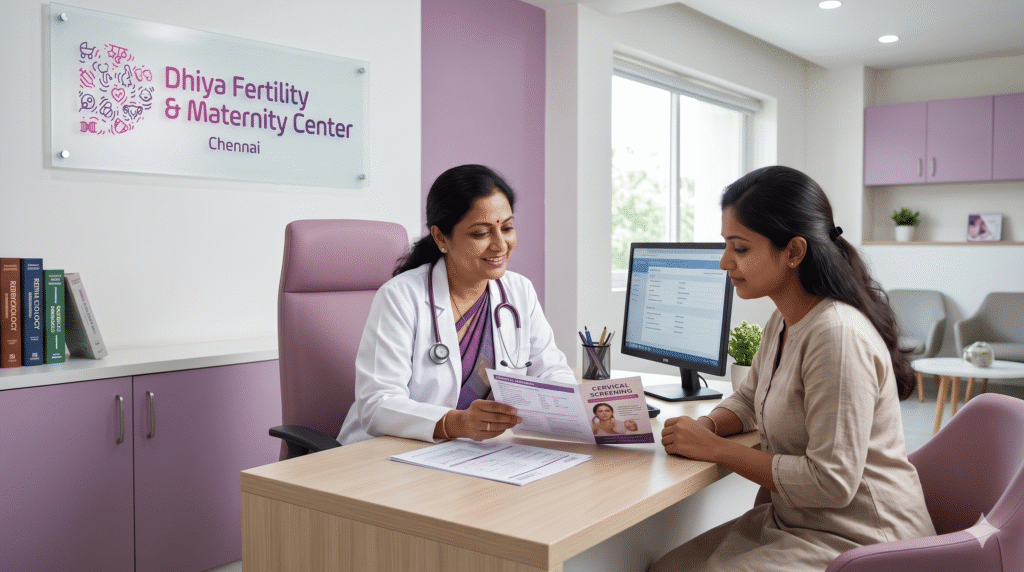
At Dhiya Fertility & Maternity Center (DFMC), Chennai, women’s preventive healthcare is approached with care, privacy, and modern diagnostic support.
DFMC offers:
- Advanced cervical screening evaluation
- Colposcopy services
- HPV-related guidance
- Women’s health consultations
- Preventive gynecology care
The focus is on early detection, patient awareness, and timely medical support in a comfortable clinical environment.
When Should You Visit a Gynecologist?
You should consider consultation if you experience:
- Unusual vaginal bleeding
- Bleeding after intercourse
- Persistent pelvic pain
- Abnormal discharge
- Irregular Pap smear reports
Even without symptoms, regular preventive screening is recommended.
Final Thoughts
Advanced cervical cancer screening is not just about detecting disease—it is about protecting long-term women’s health through early prevention and awareness.
Regular screening, timely medical advice, and HPV awareness can significantly reduce cervical cancer risk. Women should not wait for symptoms before taking preventive care seriously.
Frequently Asked Questions (FAQ)
1. What is advanced cervical cancer screening?
Advanced cervical cancer screening includes modern methods like HPV testing and colposcopy to detect abnormal cervical changes early.
2. Is cervical cancer screening painful?
Most screening procedures cause only mild discomfort and are usually completed within a few minutes.
3. What is a colposcopy test used for?
A colposcopy helps doctors closely examine the cervix when Pap smear or HPV test results are abnormal.
4. What does ASCUS mean in a Pap smear report?
ASCUS indicates mild abnormal cervical cell changes that may require monitoring or additional testing.
5. Can HPV vaccination prevent cervical cancer?
HPV vaccination helps reduce the risk of HPV-related cervical cancer significantly.
Reach Us
- No. 46 G Square, Kanthanchavadi OMR, Chennai, TAMIL NADU 600096, India
- +91 99621 00003
- https://thedfmc.com/