
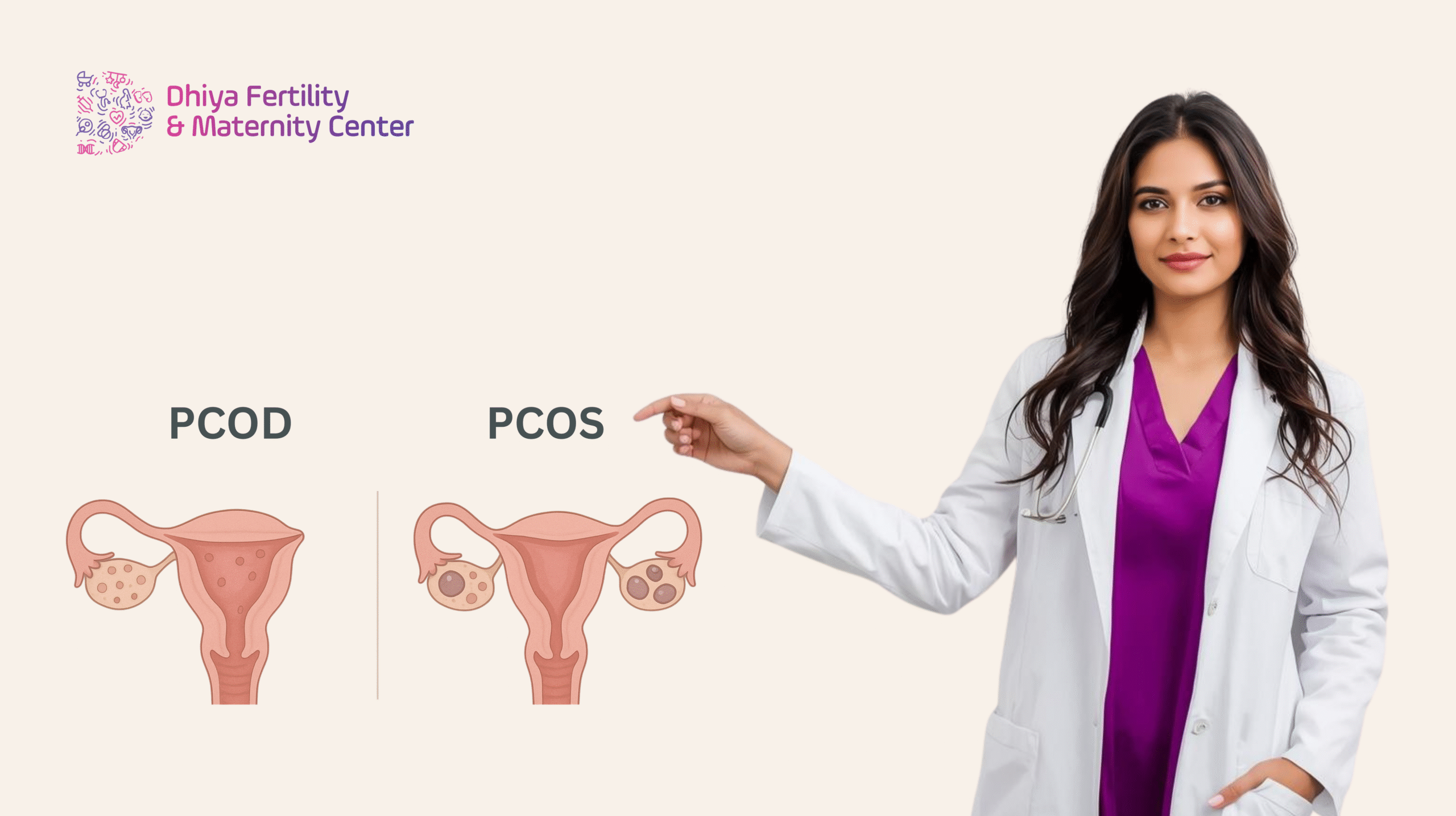
Many women today face hormonal problems that affect their health, mood, and even fertility. Among these, PCOS and PCOD are the most common conditions that often cause confusion. Though the names sound similar, there are key differences between the two. Understanding them helps in getting the right treatment at the right time. will see the difference between pcos vs pcod below.
What is PCOD?
Polycystic Ovarian Disease (PCOD) happens when a woman’s ovaries release many immature or partially mature eggs. Over time, these eggs turn into small cysts on the ovaries. PCOD mainly results from hormonal imbalance, where the ovaries start producing more male hormones (androgens) than required.
Women with PCOD might experience:
- Irregular menstrual cycles
- Weight gain
- Hair thinning or hair loss
- Oily skin or acne
- Difficulty in conceiving (in some cases)
PCOD is common and manageable with proper lifestyle changes and timely medical care.
What is PCOS?
Polycystic Ovary Syndrome (PCOS) is a more serious hormonal disorder where the ovaries produce higher levels of androgens, disrupting ovulation.
Unlike PCOD, PCOS affects the metabolic system as well, and can increase the risk of other health issues such as diabetes, high cholesterol, and hypertension.
Common symptoms include:
- Irregular or missed periods
- Excess facial or body hair
- Weight gain around the abdomen
- Acne and oily skin
- Difficulty getting pregnant
- Fatigue or mood changes
PCOS requires early diagnosis and consistent medical care to prevent long-term health problems.
PCOS vs PCOD – What’s the Difference?
While both involve ovarian cysts and hormonal imbalance, there are important differences:
| Aspect | PCOD | PCOS |
| Nature | Hormonal imbalance due to immature eggs | Metabolic and endocrine disorder |
| Severity | Common and manageable | More complex and long-term |
| Ovulation | Often occurs with irregular cycles | Rare or absent in most cases |
| Fertility Impact | May cause delayed conception | May cause infertility if untreated |
| Treatment | Lifestyle management + medication | Requires medical, hormonal, and lifestyle care |
In short, every woman with PCOD doesn’t have PCOS, but PCOS often includes PCOD symptoms with more severe hormonal issues.
Causes of PCOS and PCOD
Though the exact cause isn’t fully understood, some common factors include:
- Genetic predisposition (runs in families)
- Unhealthy lifestyle and poor diet
- Lack of physical activity
- Stress and disturbed sleep patterns
Insulin resistance and hormonal imbalance
Treatment Options for PCOS and PCOD in Chennai
Treatment depends on the woman’s age, symptoms, and whether she plans to conceive. The good news is — with proper medical care and guidance, both PCOD and PCOS can be effectively managed.
Here’s how it’s generally approached:
1. Lifestyle Management:
Regular exercise, balanced diet, and maintaining a healthy weight are key.
Reducing refined sugars and processed foods helps balance hormones naturally.
2. Medical Treatment:
Doctors may prescribe hormonal medicines to regulate periods.
For those planning pregnancy, fertility medicines can help stimulate ovulation.
In some cases, insulin-sensitizing drugs are used to manage blood sugar levels.
3. Supportive Care:
Stress management, good sleep, and regular follow-ups play an important role in recovery.
Why DFMC is One of the Trusted Centers in Chennai
For women in Chennai looking for reliable care for PCOS or PCOD, Dhiya Fertility & Maternity Center (DFMC) is one of the trusted options.The center provides personalized treatment based on each woman’s hormonal profile, lifestyle, and fertility goals.
With experienced gynecologists, endocrinologists, and fertility experts, DFMC focuses on holistic and non-invasive management, combining medical care with lifestyle counseling.
Many women have successfully managed PCOS and PCOD symptoms under guided care at DFMC, regaining hormonal balance and improving overall well-being.
Final Thoughts
Both PCOS and PCOD are common, but they don’t define your health or fertility. Early diagnosis, healthy habits, and proper medical guidance can help you lead a normal life.
If you notice irregular periods, sudden weight changes, or difficulty conceiving, don’t ignore them — consult a qualified gynecologist in Chennai and take the first step towards recovery.
DFMC – Dhiya Fertility & Maternity Center, Chennai
Caring for women at every stage of life with compassion, science, and trust.


